Mongolia is a country with a rich history and a unique culture that has been shaped by its geography, its interactions with its neighbors, and its own internal developments. From its nomadic past to its modern-day status as a market economy, Mongolia has undergone significant changes throughout its history.
On December 29, 1911, Mongolia declared its independence from the Qing dynasty, marking the end of over 250 years of Chinese rule and the beginning of its journey as a sovereign state. However, Mongolia’s path to independence was not easy, and the country has faced numerous challenges and setbacks throughout its history.
In this article, we will explore the history and culture of Mongolia, including the 1911 Declaration of Independence, the country’s relationship with the Soviet Union and China, and the challenges and accomplishments of modern Mongolia. We will delve into the unique aspects of Mongolian culture and society, and examine how they have been shaped by the country’s history and geography. Whether you are a history buff, a culture enthusiast, or just someone who is curious about this fascinating country, this article has something for you.
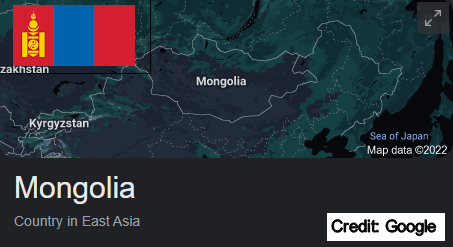
Location of Mongolia
Mongolia is a landlocked country located in East Asia, bordered by Russia to the north and China to the south, east and west. It has a population of around 3 million people and a land area of over 1.5 million square miles, making it the 18th largest country in the world by land area.
The History of Mongolia
The history of Mongolia stretches back millennia, with the earliest known human habitation dating back to the Paleolithic era. Throughout its history, Mongolia has been shaped by its geography, which has made it both a crossroads and a buffer zone between the major powers of Asia.
Mongolia declared its independence from the Qing dynasty on December 29, 1911, ending over 250 years of Chinese rule. The Qing dynasty was the last imperial dynasty of China, ruling from 1644 to 1912. The Qing dynasty was founded by the Manchu people, a Tungusic-speaking people who migrated from Manchuria to conquer the Ming dynasty in 1644.
The Qing dynasty was a time of great cultural and economic development in China, but it was also marked by political instability, corruption, and external aggression. In the late 19th and early 20th centuries, the Qing dynasty was faced with internal and external challenges, including the Boxer Rebellion, foreign invasions, and the rise of nationalism and republicanism.
The Declaration of Independence in 1911
The declaration of independence in 1911 was the result of a series of political and social changes that had been building for decades. It was sparked by the overthrow of the Qing dynasty in the 1911 Revolution, which was led by Sun Yat-sen, a Chinese nationalist and political leader who is often referred to as the “Father of Modern China.”
After declaring independence, Mongolia began to establish itself as a sovereign state. It adopted a new constitution, established a parliament, and implemented a series of economic and social reforms. However, the new government faced numerous challenges, including political instability, economic instability, and external threats.
In the 1920s, Mongolia was invaded by the Soviet Union, which established a communist government in the country. For the next 70 years, Mongolia was a Soviet satellite state, with close ties to the Soviet Union and a planned economy modeled on the Soviet system.
During this period, Mongolia underwent significant industrialization and modernization, but it also experienced political repression and human rights abuses. In the 1980s, as the Soviet Union began to reform and liberalize under the leadership of Mikhail Gorbachev, Mongolia also began to move towards a more open and democratic society.
In 1992, Mongolia adopted a new constitution and transitioned to a market economy, following the collapse of the Soviet Union. Since then, Mongolia has faced numerous challenges, including economic instability, political instability, and rising inequality. However, it has also made significant progress in building a more democratic and open society, and has become a member of international organizations such as the United Nations and the World Trade Organization.
Mongolia Today
Today, Mongolia is a country with a rich history and a unique culture, shaped by its geography and its relationship with its neighbors. It is a country that is facing many challenges, but it is also a country that is moving forward and looking towards a brighter future.
https://lastset.online/enautopsy-the-tragic-final-moments-of-amie-huguenard/
FAQs :
Q: What is Mongolia’s history and culture?
A: Mongolia has a rich history that stretches back millennia, with the earliest known human habitation dating back to the Paleolithic era. Throughout its history, Mongolia has been shaped by its geography, which has made it both a crossroads and a buffer zone between the major powers of Asia. Mongolia has a unique culture that is influenced by both its nomadic past and its interactions with other cultures, including Chinese, Russian, and Tibetan.
Q: What is the significance of the 1911 Declaration of Independence?
A: The 1911 Declaration of Independence marked the end of over 250 years of Chinese rule in Mongolia and the beginning of Mongolia’s journey as a sovereign state. The declaration was the result of a series of political and social changes that had been building for decades, and it was sparked by the overthrow of the Qing dynasty in the 1911 Revolution. The declaration set the stage for Mongolia to establish itself as a sovereign state and to begin implementing a series of economic and social reforms.
Q: How has Mongolia’s relationship with the Soviet Union and China impacted its history?
A: Mongolia’s relationship with the Soviet Union and China has had a significant impact on its history. In the 1920s, Mongolia was invaded by the Soviet Union, which established a communist government in the country. For the next 70 years, Mongolia was a Soviet satellite state, with close ties to the Soviet Union and a planned economy modeled on the Soviet system. In 1992, following the collapse of the Soviet Union, Mongolia adopted a market economy and began to transition towards a more open and democratic society. Mongolia’s relationship with China has also been complex, with periods of both cooperation and conflict throughout history.
Q: What are some of the challenges and accomplishments of modern Mongolia?
A: Modern Mongolia has faced numerous challenges, including economic instability, political instability, and rising inequality. However, it has also made significant progress in building a more democratic and open society, and has become a member of international organizations such as the United Nations and the World Trade Organization. Some of the accomplishments of modern Mongolia include the adoption of a new constitution, the establishment of a parliament, and the implementation of economic and social reforms.
