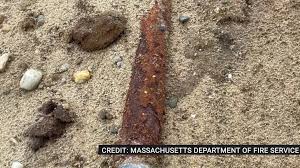
Beachgoers looking for seashells on Nantucket usually do not expect to stumble across live military history. However, heavy coastal erosion has a way of uncovering long-buried secrets.
On Friday, May 22, 2026, the Massachusetts State Police Bomb Squad, in a joint operation with the U.S. Navy, conducted a controlled detonation of several World War II-era rockets discovered inside an eroding sand dune along the Nantucket coastline. The sudden emergency response briefly locked down a section of the island’s famous shoreline, highlighting a lingering historical hazard that continues to resurface decades after the conclusion of the war.
A Shocking Discovery in the Dunes
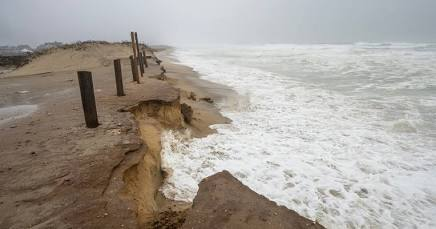
The munitions were initially discovered by a local contractor working in the Tom Nevers area on the south side of the island. Tucked deep inside a heavily eroded sand dune, the contractor spotted what appeared to be rusted, metallic military ordnance and immediately contacted local law enforcement.
Nantucket Police Chief Michael Cranson confirmed that local officials quickly established a safety perimeter and called in specialized reinforcements. Due to the volatile nature of aging explosives, a multi-agency task force was mobilized, including:
- The Massachusetts State Police Bomb Squad
- The U.S. Navy’s Explosive Ordnance Disposal (EOD) Mobile Unit 12
- The Nantucket Fire Department
- The Massachusetts Department of Fire Services Troop D
Upon assessing the site, military technicians identified the objects as multiple live military rockets dating back to the 1940s.
Why Are There Rockets on Nantucket?
To those unfamiliar with New England’s military history, finding heavy munitions on a vacation island might seem baffling. However, during World War II, the United States military heavily utilized Nantucket and its surrounding waters.
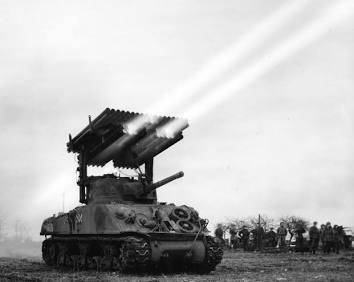
The U.S. Government leased the Tom Nevers site between 1943 and 1946 specifically for Navy pilots to practice aerial rocket strikes. The location was officially designated as an aerial training range, divided into specialized zones including the Aerial Rocket Range Target #1 and the Aerial Rocket Range Fan. Over three years of intensive training, thousands of practice rounds—and live munitions—were fired into the sand and surf.
While the Army Corps of Engineers has managed the “Nantucket Ordnance Site Munitions Response Site” for decades to clean up the area, nature frequently outpaces recovery efforts. As intensifying Atlantic storms and rising sea levels rapidly erode the southern dunes of Nantucket, forgotten ordnance is steadily being pushed back out into the open.
The Controlled Blast
Moving unstable, decades-old explosives off an island is incredibly risky. Instead, bomb technicians chose to perform a countercharge—a controlled explosion directly on-site to safely neutralize the live threat.
The team buried the rockets safely away from immediate structures, packed them with specialized explosives, and initiated a controlled detonation. The loud blast echoed across the Tom Nevers neighborhood, successfully mitigating the public hazard without causing injuries or property damage. Following the explosion, the scene was thoroughly swept for secondary fragments and officially released back to local town authorities.
Local officials have reiterated that if residents or tourists ever encounter a metallic, cylindrical, or suspicious object resembling military hardware on the beach, they should never touch or move it. The standard protocol is to note the location, step away, and call 911 immediately.
