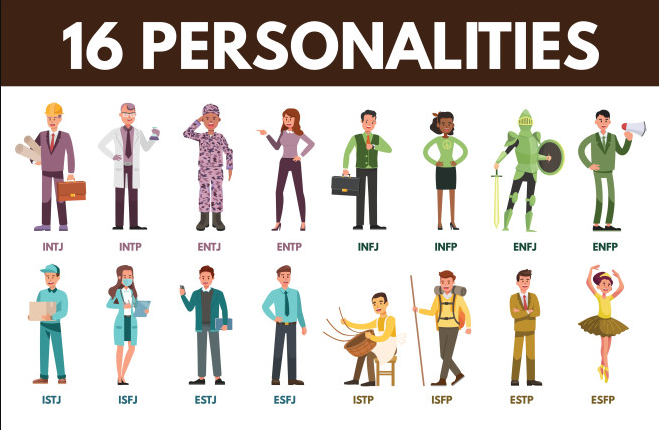
Are you an introvert or an extrovert? Do you prefer to focus on the big picture or the details? These are just a few of the questions that the Myers-Briggs Personality Types Test aims to answer. Based on the work of psychologist Carl Jung, the Myers-Briggs test is a widely used tool for understanding and categorizing personality types. In this article, we will explore the basics of the Myers-Briggs test, how it works, and how it can help you better understand yourself and others.
What is the Myers-Briggs Personality Types Test?
The Myers-Briggs Personality Types Test is a psychological assessment tool that aims to identify an individual’s personality type based on their preferences in four areas:
- Extraversion (E) vs. Introversion (I): This dimension measures how an individual derives their energy. Extraverts tend to be more outgoing and energetic, while introverts tend to be more inwardly focused and reserved.
- Sensing (S) vs. Intuition (N): This dimension measures how an individual processes information. Sensing types tend to be more practical and grounded, focusing on facts and details. Intuitive types tend to be more imaginative and abstract, focusing on patterns and possibilities.
- Thinking (T) vs. Feeling (F): This dimension measures how an individual makes decisions. Thinking types tend to be more logical and analytical, while feeling types tend to be more empathetic and emotional.
- Judging (J) vs. Perceiving (P): This dimension measures how an individual approaches the outside world. Judging types tend to be more organized and structured, while perceiving types tend to be more flexible and adaptable.
Based on these four dimensions, the Myers-Briggs test assigns individuals to one of 16 personality types, such as INTJ (Introverted, Intuitive, Thinking, Judging) or ESFP (Extraverted, Sensing, Feeling, Perceiving). Each type is thought to have its own unique characteristics and tendencies, which can be helpful in understanding how an individual thinks, communicates, and interacts with others.
How Does the Myers-Briggs Test Work?
The Myers-Briggs test is typically administered through a series of questions that ask individuals to choose between two options. For example, a question might ask if an individual prefers to spend time alone or with others, or if they prefer to focus on facts or possibilities. Based on their responses, the test calculates the individual’s scores on each of the four dimensions and assigns them to a personality type.
There are several versions of the Myers-Briggs test available, including the original MBTI (Myers-Briggs Type Indicator) and the Five Factor Personality Inventory (FFPI). The MBTI is the most well-known and widely used version of the test, and it is often administered by trained professionals or through online platforms. The FFPI is a shorter and more modernized version of the test that measures the same four dimensions as the MBTI, but with a focus on the “Big Five” personality traits: openness, conscientiousness, extraversion, agreeableness, and neuroticism.
https://lastset.online/enremembering-the-legend-peles-best-quotes-and-inspirational-words/
How Can the Myers-Briggs Test Benefit You?
Understanding your personality type can have a number of benefits, both personally and professionally. By learning more about your tendencies and preferences, you can gain insight into your strengths, weaknesses, and communication style. This can help you make more informed decisions about your career, relationships, and personal development.
In the workplace, the Myers-Briggs test can be a useful tool for team building and conflict resolution. By understanding the personality types of your colleagues, you can learn to communicate more effectively and appreciate their unique perspectives and contributions. The test can also be helpful in identifying career paths that align with your strengths and interests.
FAQs:
- What is the Myers-Briggs Personality Types Test?
- The Myers-Briggs Personality Types Test is a psychological assessment tool that aims to identify an individual’s personality type based on their preferences in four areas: extraversion vs. introversion, sensing vs. intuition, thinking vs. feeling, and judging vs. perceiving.
- How does the Myers-Briggs Test work?
- The Myers-Briggs Test is typically administered through a series of questions that ask individuals to choose between two options. Based on their responses, the test calculates the individual’s scores on each of the four dimensions and assigns them to a personality type.
- How can the Myers-Briggs Test benefit me?
- Understanding your personality type can have a number of benefits, both personally and professionally. By learning more about your tendencies and preferences, you can gain insight into your strengths, weaknesses, and communication style, and make more informed decisions about your career, relationships, and personal development. In the workplace, the Myers-Briggs test can be a useful tool for team building and conflict resolution.
